

NDEOA Tap-to-Sync System Architecture & Flow Design
This project focused on designing and documenting the architecture, workflow, and interaction logic for an NDEOA tap-to-sync system. The system was modelled around a wearable device that detects unsynced workout data, prepares payloads, communicates with a local hub, manages packet-level delivery, handles retry conditions, and records synchronisation metrics. The project included both high-level architecture and detailed behavioural modelling to show how the system should operate under normal, failed, and retry-based conditions.
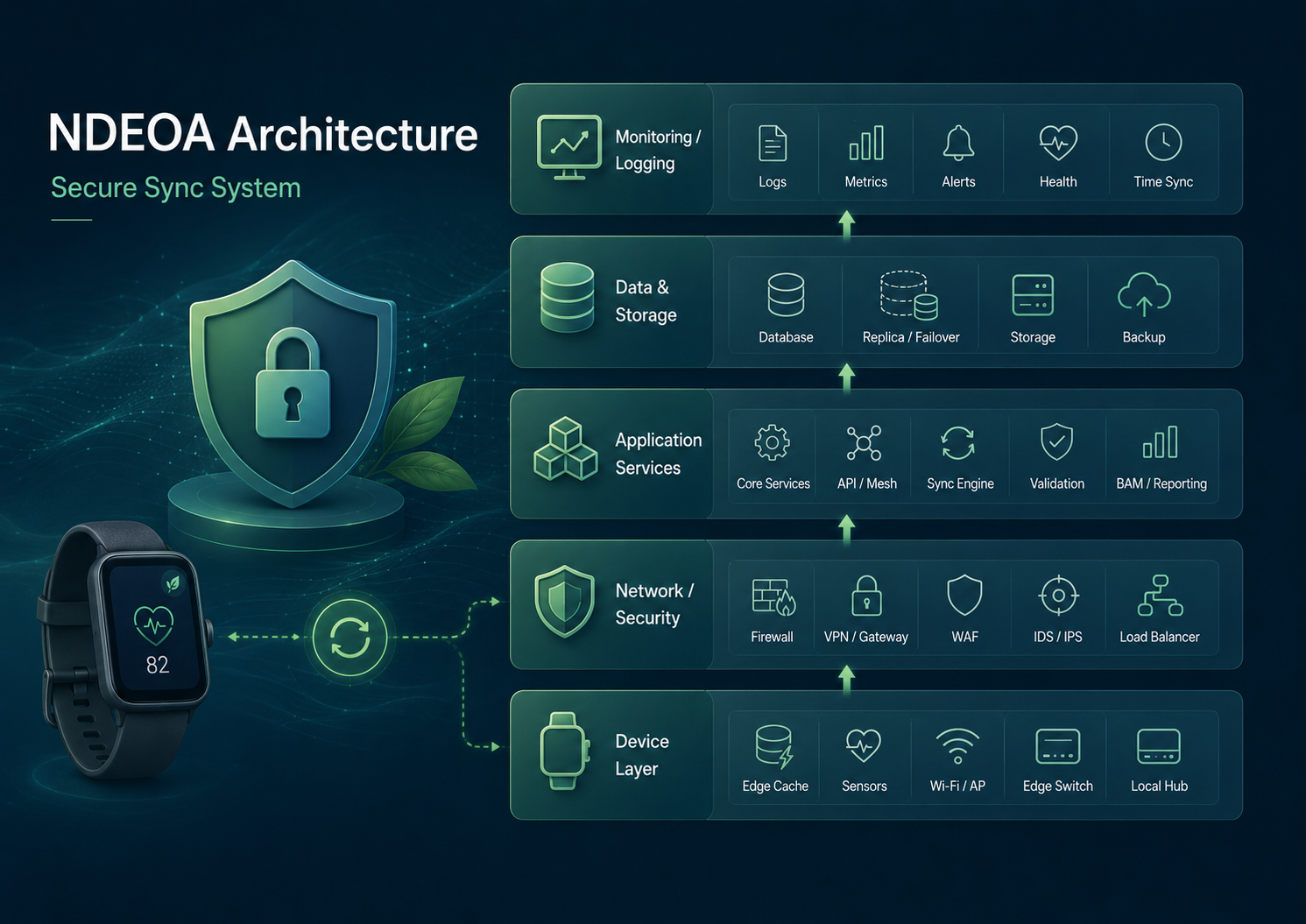
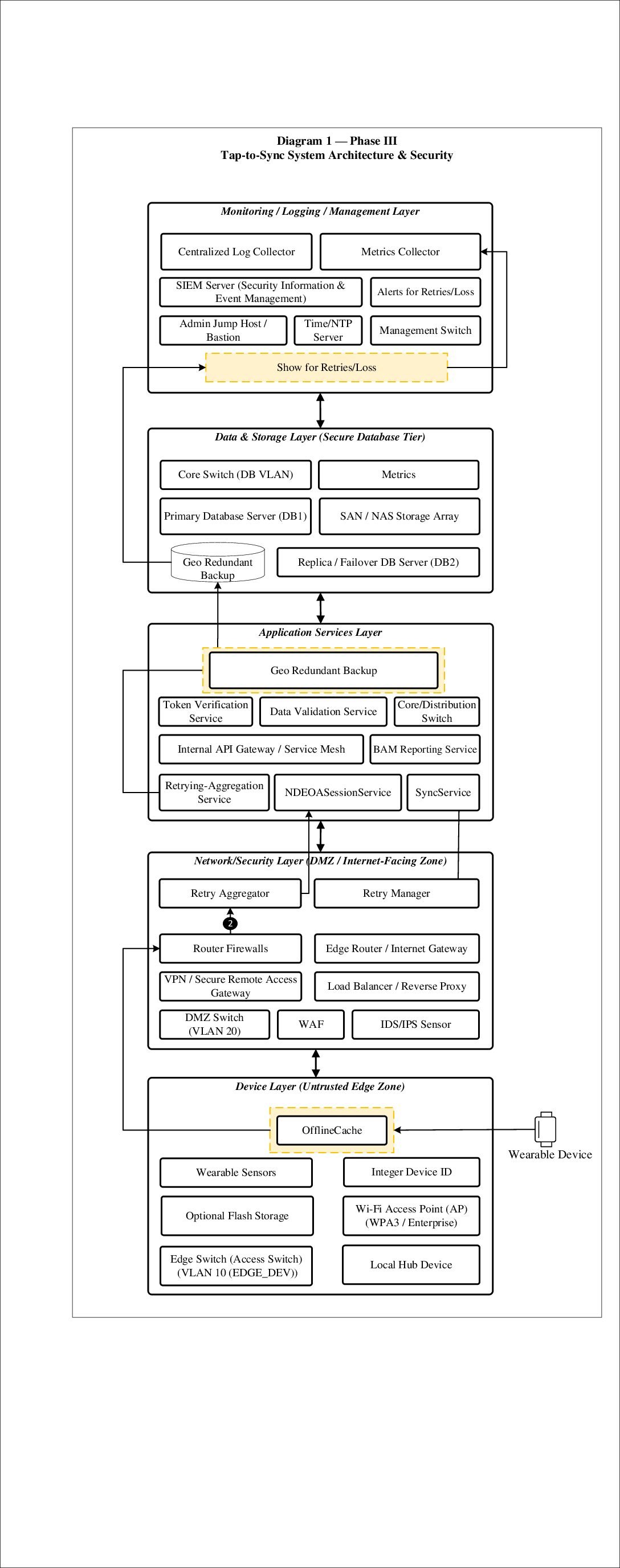
The architecture design covered multiple system layers, including the device layer, network and security layer, application services layer, data and storage layer, and monitoring/logging/management layer. This helped present the system as a secure and structured synchronisation environment rather than a simple device-to-server connection. Security and operational resilience were considered through components such as firewalls, WAF, IDS/IPS, VPN or gateway controls, load balancing, service mesh/API gateway, database failover, backup, metrics collection, SIEM, alerts, and administrative management controls.
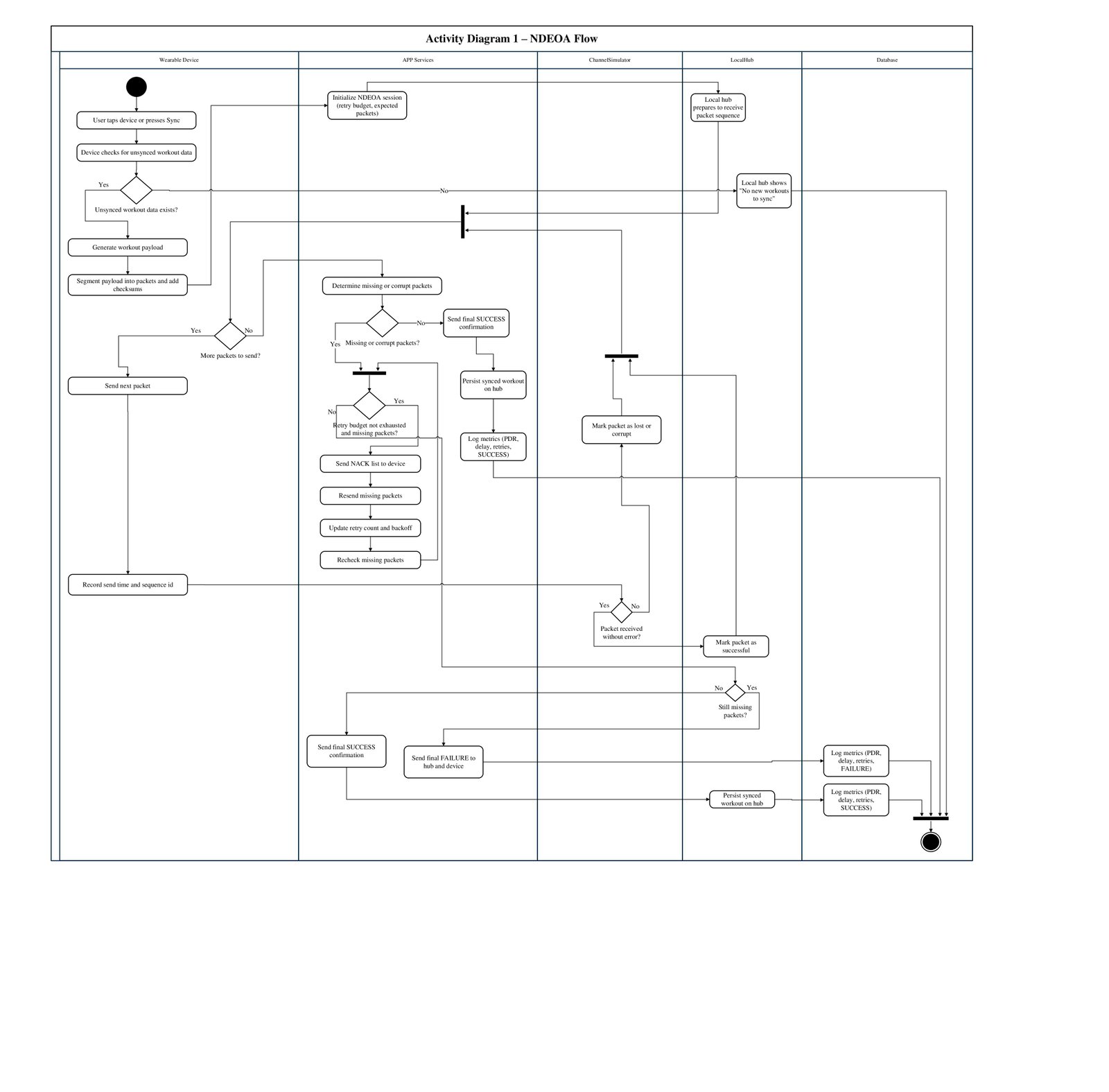
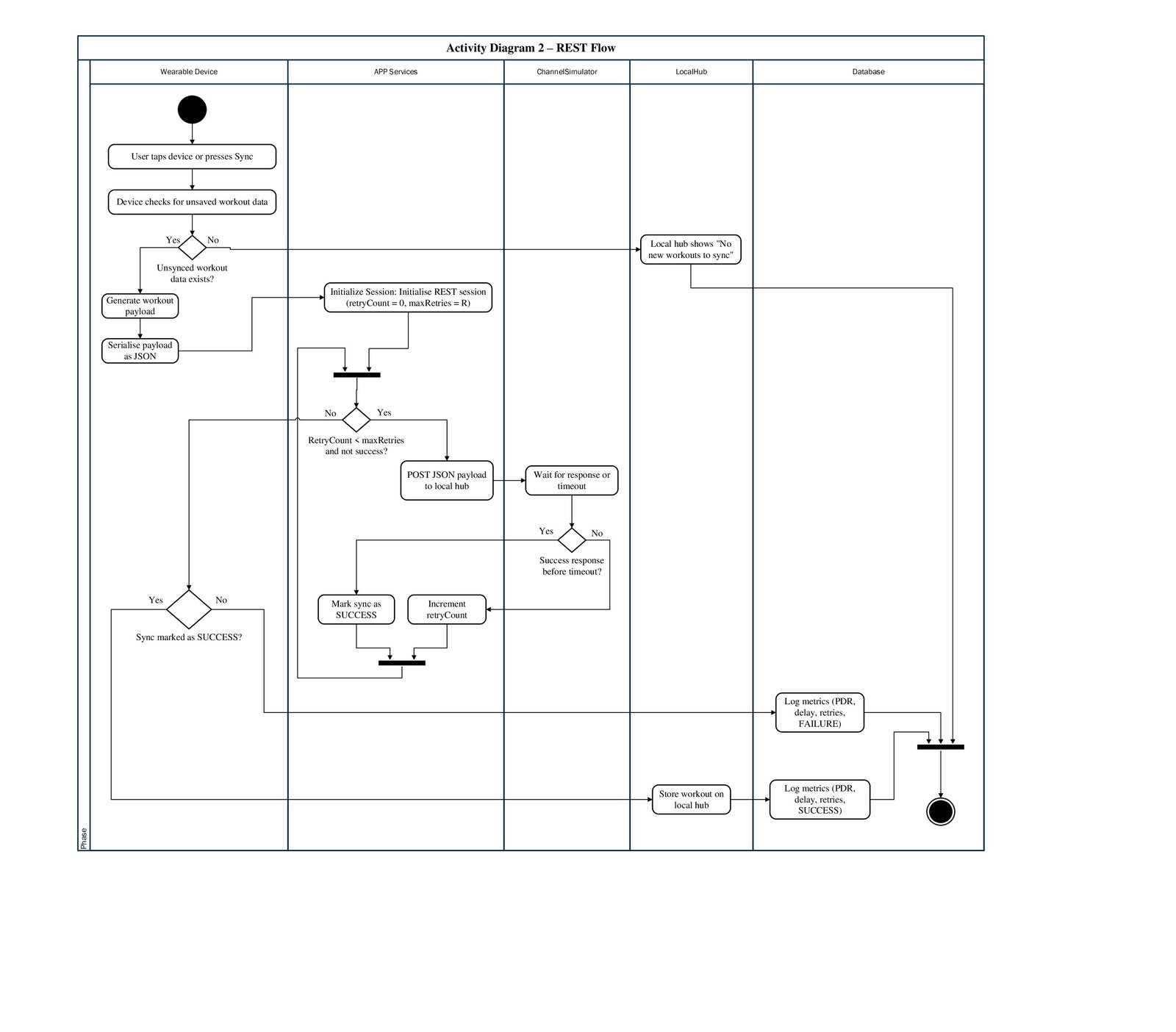
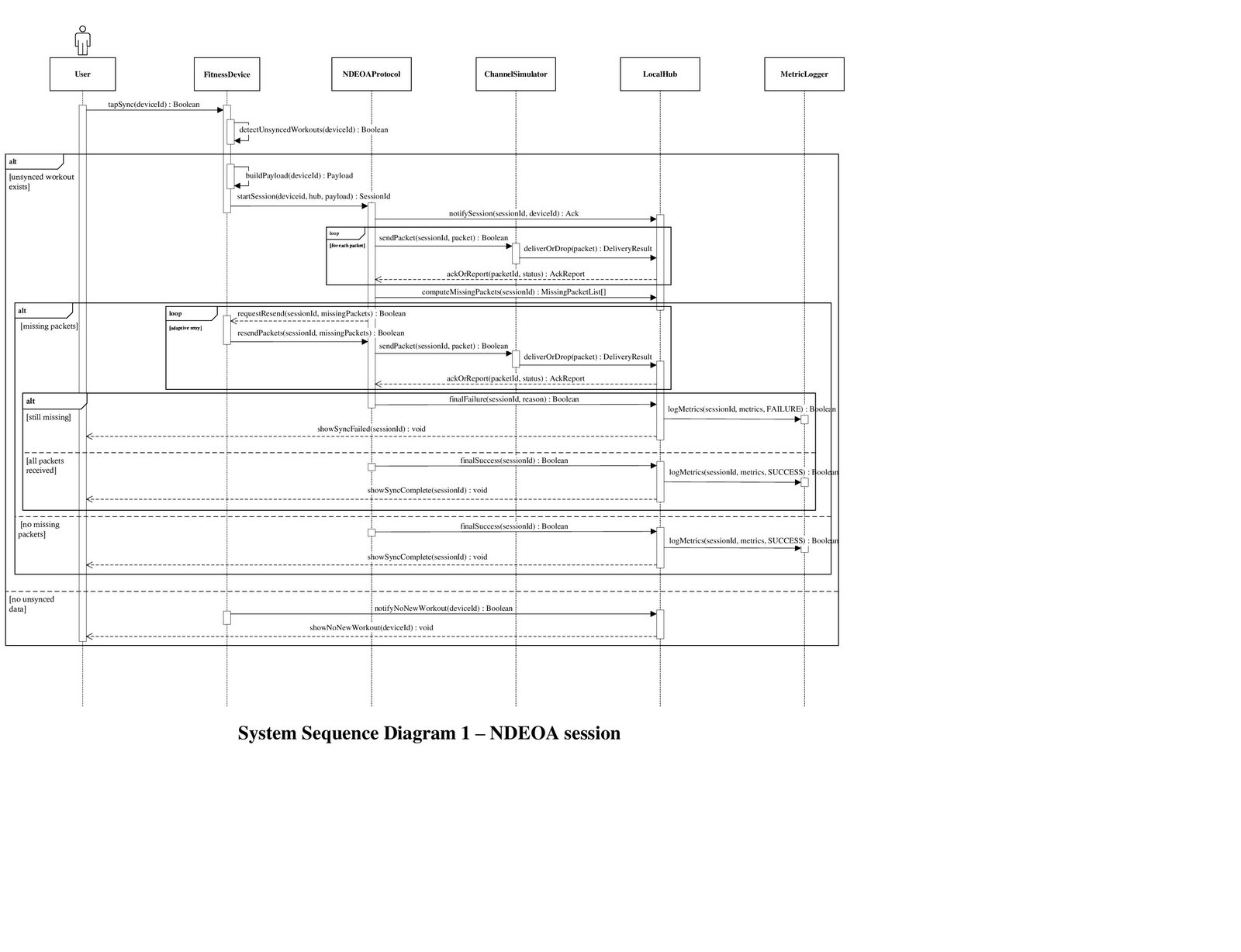
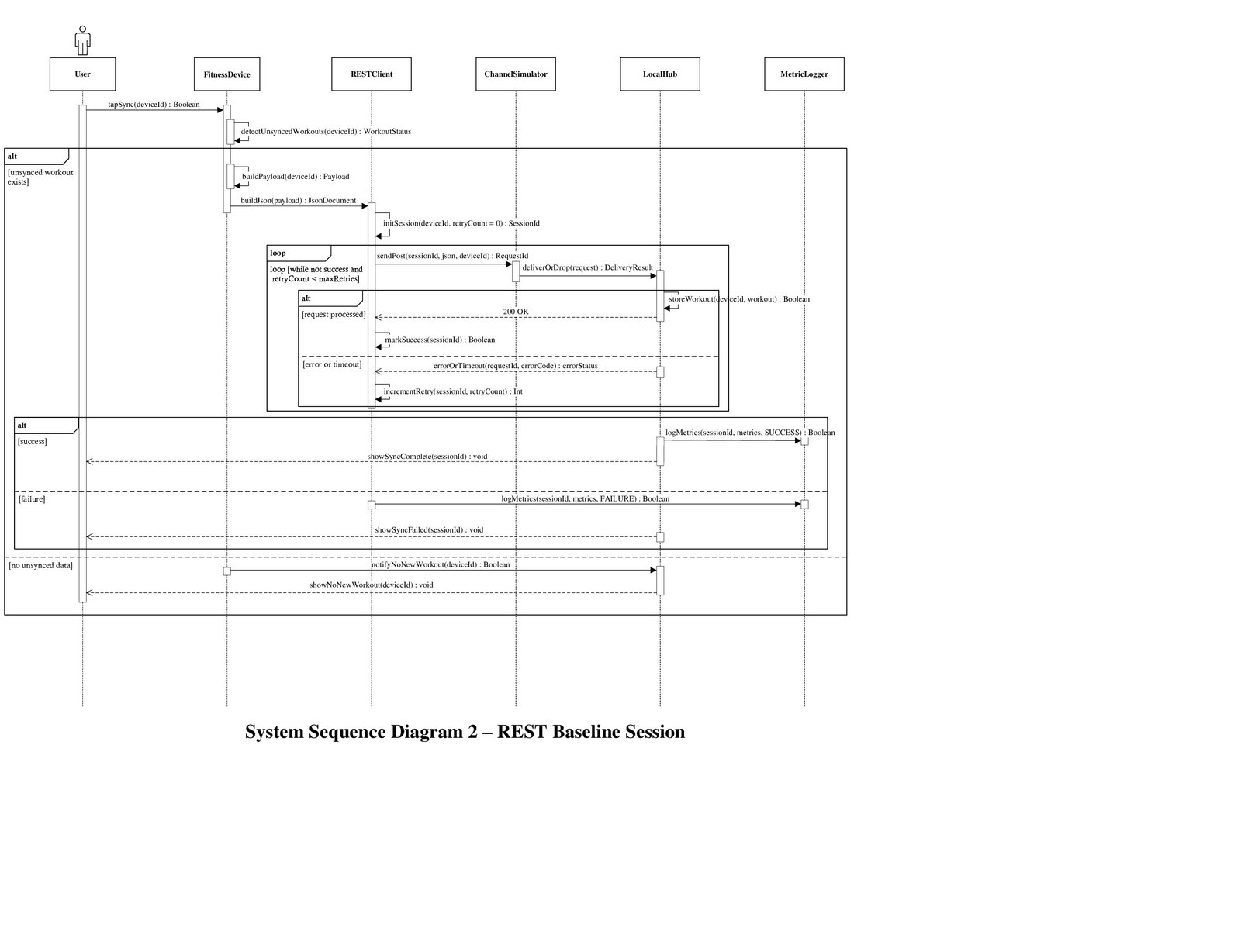
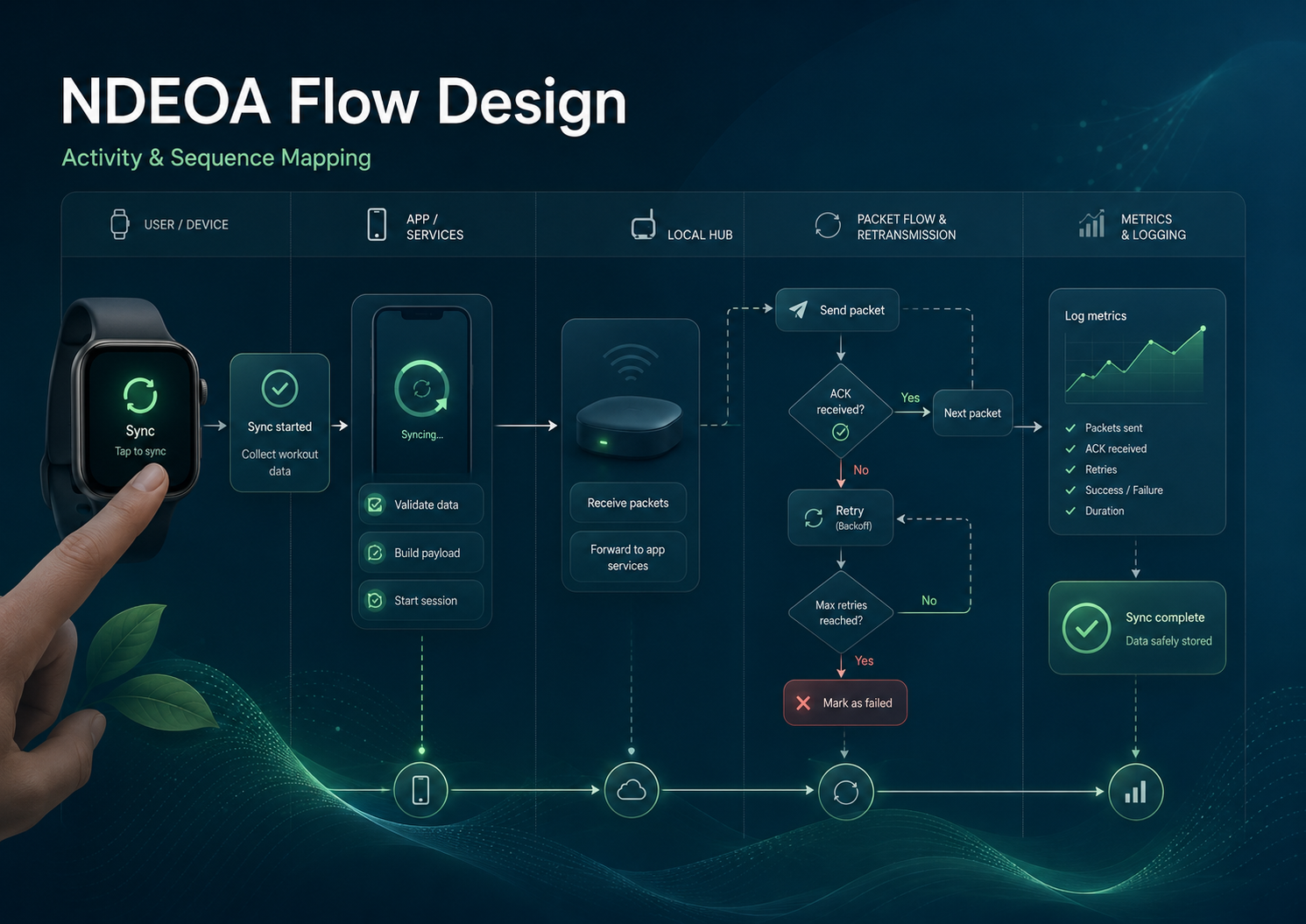
The workflow modelling included an NDEOA-specific activity flow where workout data is segmented into packets, checksums are added, missing or corrupt packets are identified, NACK-based resending is triggered, retry budgets are applied, and final success or failure is logged. A REST baseline flow was also modelled for comparison, showing JSON payload submission, timeout handling, retry count management, success/failure states, and local hub storage. System sequence diagrams were prepared to show how the user, wearable device, protocol/client layer, channel simulator, local hub, and metric logger interact during synchronisation.
Key Contributions & Strategic Impact
I contributed by converting a complex wearable synchronization problem into a structured architecture and process-modelling package. The work clarified how device data should move through the system, how failures and missing packets should be handled, how success/failure should be logged, and how the wider architecture should support secure and reliable operation. The strategic impact was the creation of a clear technical blueprint that can guide future engineering, testing, protocol comparison, and implementation planning.
- Designed a layered tap-to-sync system architecture for wearable data synchronisation.
- Modelled device, network/security, application services, data/storage, and monitoring layers.
- Created NDEOA activity flow covering packet segmentation, checksums, missing packet detection, NACK-based resend, retry budget, and final success/failure handling.
- Created REST baseline flow for comparison with retry count, timeout, success, and failure logic.
- Developed system sequence diagrams showing interactions between user, fitness device, protocol/client, channel simulator, local hub, and metric logger.Included operational metrics such as packet delivery ratio, delay, retry count, success, and failure logging.
- Addressed secure architecture concerns through gateway, firewall, WAF, IDS/IPS, load balancing, database failover, backup, metrics, logging, and SIEM-style monitoring.
Strategic Value Summary
This project produced a complete technical design foundation for a secure wearable tap-to-sync system. It provided both architecture-level clarity and workflow-level detail, enabling developers, architects, and stakeholders to understand how synchronisation, retry handling, security, storage, and monitoring should work together in a reliable system design.