

Academic Conference Management System
This project involved the end-to-end software architecture design of an Academic Conference Management System intended to support conference attendees, researchers, speakers, and administrators through both web and mobile applications.
The system was designed to provide a unified experience for conference participants, allowing them to browse current, upcoming, and previous conferences, access schedules, view presentation details, review research papers, explore author affiliations, and maintain personal notes linked to conference content.
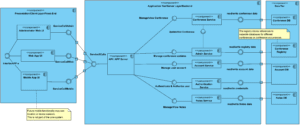
The architecture adopted a structured 3-tier client-server model consisting of presentation, application, and data layers. The presentation layer included web, mobile, and administrative interfaces, while the application layer centralized authentication, conference management, content services, and note management. The data layer was designed around conference-specific databases, allowing each conference occurrence to maintain its own data repository while sharing common account and note services.
A major architectural focus was scalability and maintainability. The solution separated attendee-facing functionality from administrator workflows, ensuring that conference management operations remained independent from content consumption activities. The design also introduced a conference registry mechanism capable of locating and serving information from multiple conference databases, supporting future expansion to thousands of users, multi-day conferences, and large collections of presentations and research papers.
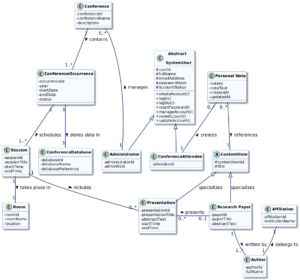
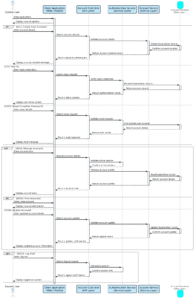
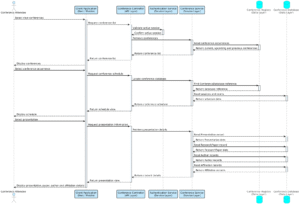
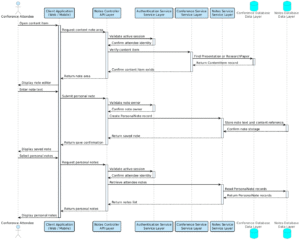
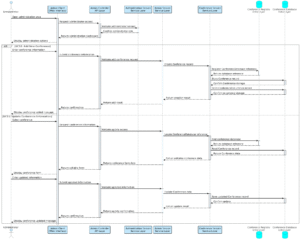
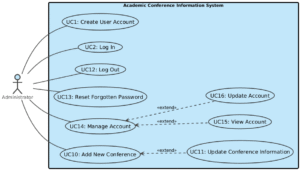
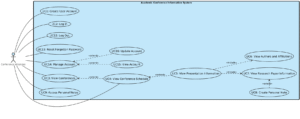
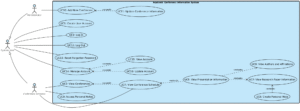
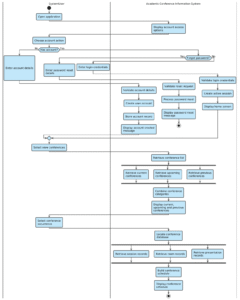
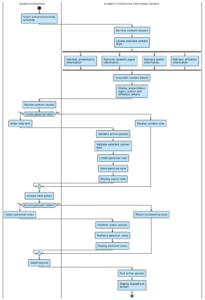
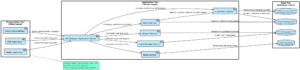
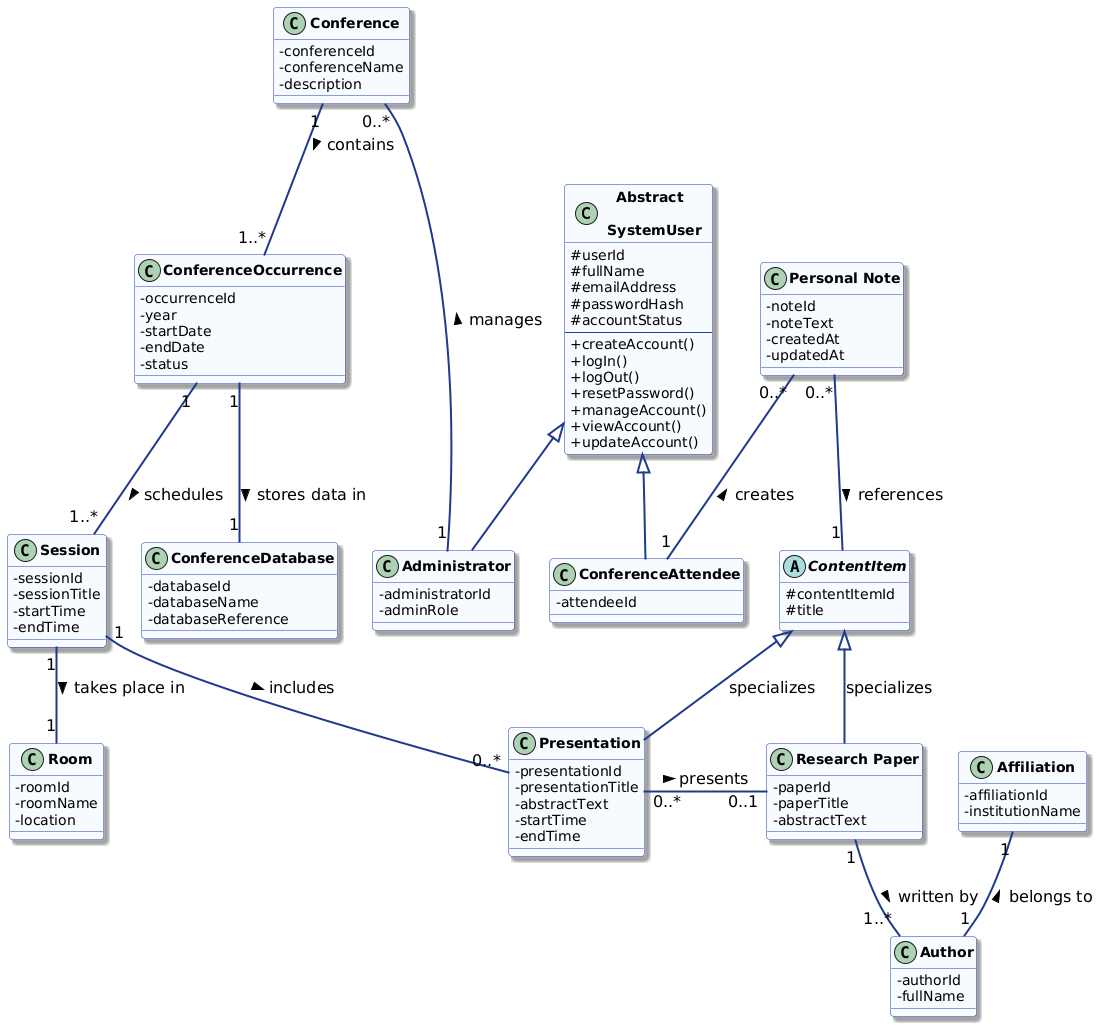
The project included comprehensive system modelling using UML use case diagrams, sequence diagrams, activity diagrams, domain models, and component architecture views. These artefacts provided clear technical guidance for future implementation teams while maintaining alignment with business requirements and user workflows.
Key Contributions & Strategic Impact
My role involved defining the overall architecture vision, system boundaries, logical structure, component interactions, and deployment approach. Beyond creating diagrams, I translated business requirements into a structured technical architecture that balanced usability, scalability, maintainability, and future extensibility. The resulting design established a clear roadmap for implementation while reducing ambiguity for future development teams and stakeholders.
Key Points
- Designed a complete 3-tier software architecture supporting web, mobile, and administrator applications.
- Created a scalable conference registry model enabling multiple conferences and conference occurrences to be managed independently.
- Developed attendee workflows covering registration, authentication, conference discovery, schedule navigation, content exploration, and personal note management.
- Architected administrator workflows for conference creation, conference updates, schedule maintenance, and content management.
- Produced comprehensive UML architecture documentation including use case, activity, sequence, class, and component diagrams.
Strategic Value Summary
This project demonstrates the ability to transform complex business requirements into a structured, scalable, and implementation-ready software architecture. The design balances user experience, operational management, and technical maintainability while providing a strong foundation for future growth. It reflects expertise in software architecture, system modelling, stakeholder requirement analysis, and enterprise application design.